

Keeping People First as OCM Adapts to AI
At OCM, helping people navigate change also means being willing to change ourselves. As AI reshapes how organizations work and how people approach their careers, we believe its value should be measured by how well it helps us serve people.
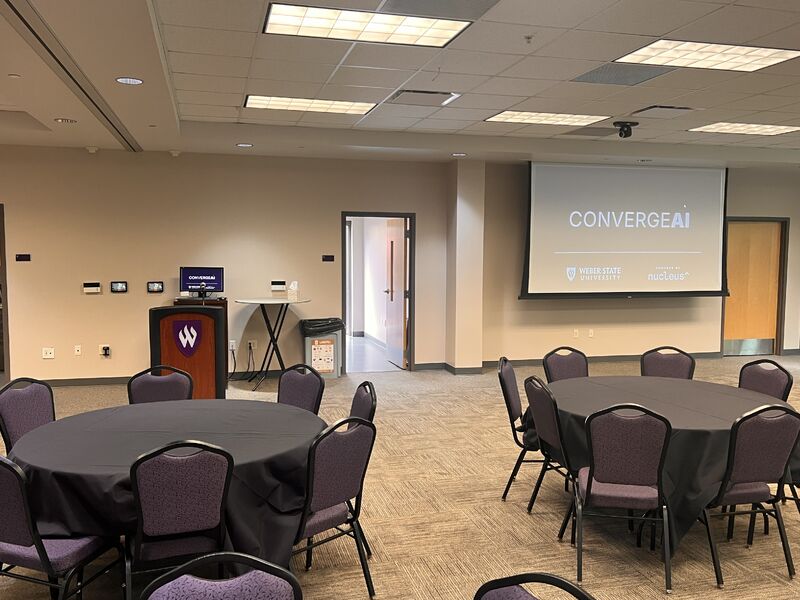
Shiloh Lloyd recently shared OCM’s experience at the Converge AI event at Weber State University. Hosted by The Nucleus Institute in support of Governor Spencer Cox’s Pro-Human AI Initiative, the event brought together Utah businesses, educators, and innovators to discuss AI and its implications for people and organizations.
For OCM, the conversation connects directly to our work in career transition and leadership development. It also brings us back to an earlier moment when we had to rethink how we delivered that work.
What the pandemic taught us about adapting
Personal, face-to-face relationships have always been central to OCM. When COVID-19 disrupted in-person meetings, we had to embrace virtual consultations and find ways to provide a personal experience without sharing the same room.
The challenge was to preserve the quality of the relationship as the way we connected changed. Someone navigating a career transition still needed to feel heard. A leader working through a difficult decision still needed thoughtful questions and candid feedback.
That experience remains relevant as we consider AI. A new way of delivering support should strengthen the experience for the person receiving it. Adopting technology is only useful when we understand what it helps someone accomplish.
Where AI can support career transition and leadership development
AI presents opportunities to help people prepare for important career conversations. A job seeker might use it to develop practice interview questions, organize accomplishments, or explore ways to explain transferable skills. A coach can then help that person evaluate the suggestions and connect them to real experience.
That distinction matters. A polished answer is useful only if it accurately reflects the individual’s background and helps an employer understand what they can contribute. Career transition also involves decisions about priorities, confidence, and direction that deserve personal attention.
In leadership development, AI could help a manager rehearse a difficult conversation or consider different ways to communicate a change. A coach can help the manager examine assumptions, account for relationships within the team, and decide how to act.
These examples illustrate where AI could contribute to our field. Each use should be evaluated for its effect on the person being supported, with human judgment guiding how the output is used.
What leaders can do now
For business and HR leaders, a practical starting point is to identify a specific need. Where do employees need more preparation? Which tasks take time away from a useful conversation? Where could an additional practice opportunity help someone feel more confident?
Start with a focused use, invite feedback from the people involved, and assess whether the experience improves. Make expectations clear about protecting personal information and reviewing AI-generated content. A tool that saves time still needs to earn people’s trust.
How OCM approaches the next change
Our responsibility is to remain open to new ways of helping clients while keeping their needs at the center of our decisions. That means asking thoughtful questions about AI and preserving the relationships, empathy, and personal connection that make our work meaningful.
Thank you to The Nucleus Institute and Weber State University for creating space for this conversation. We appreciate the opportunity to contribute OCM’s perspective as businesses and educators consider how AI can better serve people.
If your organization is helping leaders adapt to change or supporting employees through a career transition, connect with OCM to discuss the support your people need next.


